Back

Satsang
Satsang
Satsang – a method of transmitting yoga teachings
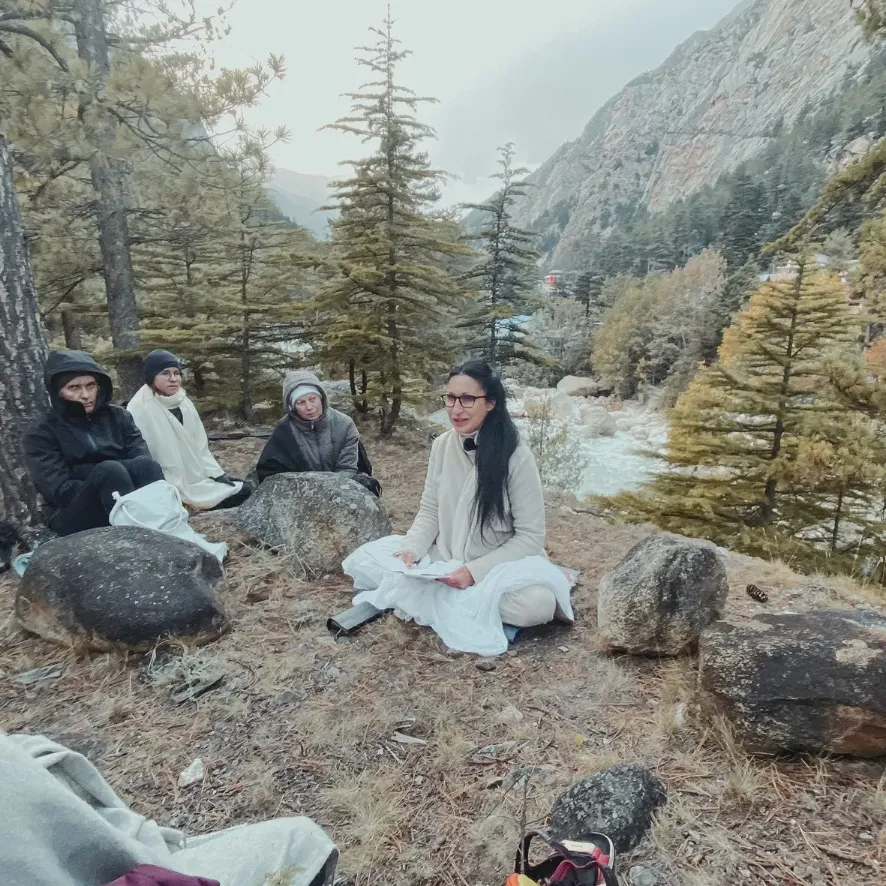
Satsang is an association with a Guru who transmits spiritual knowledge and scriptural teachings, answers disciples' questions, or together they meditate and recite mantras.
Satsang – Spiritual Gathering
Even today, the teaching of yoga is transmitted directly from Master to disciple.
This is a special and significant time when the Master shares his spiritual knowledge and experience.
Through this living connection, known as satsang, disciples have the opportunity to understand yoga practice, psychology, philosophy more deeply and to realize their true essence. It is impossible to develop spiritually without a true yoga guide - a Master, a Guru. Only a true Master can transmit knowledge about what a person has not experienced, i.e., the deepest essence of themselves - the Self, and explain the obstacles and characteristics of self-realization.
Satsang – Spiritual Gathering
Even today, the teaching of yoga is transmitted directly from Master to disciple.
This is a special and significant time when the Master shares his spiritual knowledge and experience.
Through this living connection, known as satsang, disciples have the opportunity to understand yoga practice, psychology, philosophy more deeply and to realize their true essence. It is impossible to develop spiritually without a true yoga guide - a Master, a Guru. Only a true Master can transmit knowledge about what a person has not experienced, i.e., the deepest essence of themselves - the Self, and explain the obstacles and characteristics of self-realization.
Satsang – Spiritual Gathering
Even today, the teaching of yoga is transmitted directly from Master to disciple.
This is a special and significant time when the Master shares his spiritual knowledge and experience.
Through this living connection, known as satsang, disciples have the opportunity to understand yoga practice, psychology, philosophy more deeply and to realize their true essence. It is impossible to develop spiritually without a true yoga guide - a Master, a Guru. Only a true Master can transmit knowledge about what a person has not experienced, i.e., the deepest essence of themselves - the Self, and explain the obstacles and characteristics of self-realization.
What is satsang?
Satsang (Sanskrit: सत्सङ्ग satsaṅga) translated "sat" means "truth" and "sanga" means "meeting, company, fellowship". Thus, "satsang" means "being in truth" or "association with spiritual truth". Satsang is a spiritual gathering in which higher truth is sought. In the yoga tradition, satsang is a spiritually inspiring meeting where people gather together with a spiritual Master to listen to the Guru's teachings, share experiences, meditate, and recite mantras and sacred texts.
Satsang is a way of transmitting yoga teachings. To this day in the yogic tradition, spiritual teaching is transmitted directly from Guru to disciple, and such transmission is called satsang. Satsang forms the foundation of all classical yoga, which directly means connection with the yoga tradition and the true truth. Satsang means interaction between Guru and disciples, when the Master transmits spiritual knowledge and yoga wisdom, answers disciples' questions, transmits scriptural teachings, or meditates or recites mantras together with those gathered. This helps disciples to develop awareness, deepen their understanding of yoga philosophy, and unlock their spiritual potential.
What is satsang?
Satsang (Sanskrit: सत्सङ्ग satsaṅga) translated "sat" means "truth" and "sanga" means "meeting, company, fellowship". Thus, "satsang" means "being in truth" or "association with spiritual truth". Satsang is a spiritual gathering in which higher truth is sought. In the yoga tradition, satsang is a spiritually inspiring meeting where people gather together with a spiritual Master to listen to the Guru's teachings, share experiences, meditate, and recite mantras and sacred texts.
Satsang is a way of transmitting yoga teachings. To this day in the yogic tradition, spiritual teaching is transmitted directly from Guru to disciple, and such transmission is called satsang. Satsang forms the foundation of all classical yoga, which directly means connection with the yoga tradition and the true truth. Satsang means interaction between Guru and disciples, when the Master transmits spiritual knowledge and yoga wisdom, answers disciples' questions, transmits scriptural teachings, or meditates or recites mantras together with those gathered. This helps disciples to develop awareness, deepen their understanding of yoga philosophy, and unlock their spiritual potential.
What is satsang?
Satsang (Sanskrit: सत्सङ्ग satsaṅga) translated "sat" means "truth" and "sanga" means "meeting, company, fellowship". Thus, "satsang" means "being in truth" or "association with spiritual truth". Satsang is a spiritual gathering in which higher truth is sought. In the yoga tradition, satsang is a spiritually inspiring meeting where people gather together with a spiritual Master to listen to the Guru's teachings, share experiences, meditate, and recite mantras and sacred texts.
Satsang is a way of transmitting yoga teachings. To this day in the yogic tradition, spiritual teaching is transmitted directly from Guru to disciple, and such transmission is called satsang. Satsang forms the foundation of all classical yoga, which directly means connection with the yoga tradition and the true truth. Satsang means interaction between Guru and disciples, when the Master transmits spiritual knowledge and yoga wisdom, answers disciples' questions, transmits scriptural teachings, or meditates or recites mantras together with those gathered. This helps disciples to develop awareness, deepen their understanding of yoga philosophy, and unlock their spiritual potential.
The Importance of Guru and Satsang in Yoga Teachings
In the yogic tradition, a Guru is a spiritual yoga teacher who knows the sacred secrets of yoga teachings, possesses spiritual yoga knowledge, and guides people along the path of spiritual growth. He imparts to people the guidelines of spiritual knowledge, the meaning and purpose of life, indicates how to reveal one's essence, and what obstacles and dangers lie in wait for a person on the spiritual path. The Guru is a guide who illuminates the direction and provides the means, but the person must walk the path themselves. During satsang, thanks to the Guru's teachings, people begin to understand spiritual truths, yoga philosophy, and practice more deeply. Satsang is a direct interaction between Guru and disciple, which strengthens their connection through spiritual guidance.
The Importance of Guru and Satsang in Yoga Teachings
In the yogic tradition, a Guru is a spiritual yoga teacher who knows the sacred secrets of yoga teachings, possesses spiritual yoga knowledge, and guides people along the path of spiritual growth. He imparts to people the guidelines of spiritual knowledge, the meaning and purpose of life, indicates how to reveal one's essence, and what obstacles and dangers lie in wait for a person on the spiritual path. The Guru is a guide who illuminates the direction and provides the means, but the person must walk the path themselves. During satsang, thanks to the Guru's teachings, people begin to understand spiritual truths, yoga philosophy, and practice more deeply. Satsang is a direct interaction between Guru and disciple, which strengthens their connection through spiritual guidance.
The Importance of Guru and Satsang in Yoga Teachings
In the yogic tradition, a Guru is a spiritual yoga teacher who knows the sacred secrets of yoga teachings, possesses spiritual yoga knowledge, and guides people along the path of spiritual growth. He imparts to people the guidelines of spiritual knowledge, the meaning and purpose of life, indicates how to reveal one's essence, and what obstacles and dangers lie in wait for a person on the spiritual path. The Guru is a guide who illuminates the direction and provides the means, but the person must walk the path themselves. During satsang, thanks to the Guru's teachings, people begin to understand spiritual truths, yoga philosophy, and practice more deeply. Satsang is a direct interaction between Guru and disciple, which strengthens their connection through spiritual guidance.
How does satsang help develop spiritual awareness?
Being with the Guru and in the company of other community members helps disciples develop spiritual awareness and understanding, helps them recognize illusions, and consolidate spiritual values in daily life. The Guru's words become guidelines for inner improvement. The benefit of participating in satsang is that it enables disciples to realize their inner truth more deeply, inspiring spiritual practice. Being in conscious communion with others fosters a sense of peace and unity. Satsang is not just about knowledge, it is an important tool for inner improvement designed for personal spiritual development.
How does satsang help develop spiritual awareness?
Being with the Guru and in the company of other community members helps disciples develop spiritual awareness and understanding, helps them recognize illusions, and consolidate spiritual values in daily life. The Guru's words become guidelines for inner improvement. The benefit of participating in satsang is that it enables disciples to realize their inner truth more deeply, inspiring spiritual practice. Being in conscious communion with others fosters a sense of peace and unity. Satsang is not just about knowledge, it is an important tool for inner improvement designed for personal spiritual development.
How does satsang help develop spiritual awareness?
Being with the Guru and in the company of other community members helps disciples develop spiritual awareness and understanding, helps them recognize illusions, and consolidate spiritual values in daily life. The Guru's words become guidelines for inner improvement. The benefit of participating in satsang is that it enables disciples to realize their inner truth more deeply, inspiring spiritual practice. Being in conscious communion with others fosters a sense of peace and unity. Satsang is not just about knowledge, it is an important tool for inner improvement designed for personal spiritual development.
The Origin and Tradition of Satsang
The tradition of satsang dates back to Vedic times – it was a natural form of learning. Thousands of years ago, Indian sages (rishis) and spiritual teachers (Gurus) gathered together with disciples to share spiritual knowledge and meditate. Teachings were often transmitted orally – through chants, dialogues, aphorisms, and stories. In the oldest Vedic and Upanishadic texts, one can find descriptions of such gatherings, which discussed the nature of man, his connection to the universe, and the path of spiritual liberation. Satsang in the yoga tradition is the main way of transmitting yoga teachings – a direct connection between Guru and disciple, and this tradition has been maintained to this day. Satsang is a word of Sanskrit origin, which means "being in the company of truth," i.e., being in the company of truth-seekers or associating with spiritual wisdom. The Upanishadic tradition testifies to the importance of spiritual association. Many Upanishads convey dialogues between Gurus and disciples; for example, the Prashna Upanishad tells how six seekers came together to the sage Pippalada to ask him deep questions about the Absolute Truth. The Brihadaranyaka Upanishad describes a grand spiritual conversation in the court of King Janaka, where a large group of priests from different kingdoms gathered, and the sage Yajnavalkya explained to them the nature of Brahman. Such stories show that the fellowship of searching for the truth was valued as far back as the ancient Vedic and Upanishadic eras. The Mundaka Upanishad teaches that a truth-seeker, having examined the world of temporary things, must humbly approach a spiritual Master: "Let him, with fuel-wood for sacrificial fire in hand, go only to a Guru who is learned in scriptures and firmly established in Brahman." This means close association with a Master who has realized Brahman was considered an essential condition for a disciple to perceive the eternal truth.
The Origin and Tradition of Satsang
The tradition of satsang dates back to Vedic times – it was a natural form of learning. Thousands of years ago, Indian sages (rishis) and spiritual teachers (Gurus) gathered together with disciples to share spiritual knowledge and meditate. Teachings were often transmitted orally – through chants, dialogues, aphorisms, and stories. In the oldest Vedic and Upanishadic texts, one can find descriptions of such gatherings, which discussed the nature of man, his connection to the universe, and the path of spiritual liberation. Satsang in the yoga tradition is the main way of transmitting yoga teachings – a direct connection between Guru and disciple, and this tradition has been maintained to this day. Satsang is a word of Sanskrit origin, which means "being in the company of truth," i.e., being in the company of truth-seekers or associating with spiritual wisdom. The Upanishadic tradition testifies to the importance of spiritual association. Many Upanishads convey dialogues between Gurus and disciples; for example, the Prashna Upanishad tells how six seekers came together to the sage Pippalada to ask him deep questions about the Absolute Truth. The Brihadaranyaka Upanishad describes a grand spiritual conversation in the court of King Janaka, where a large group of priests from different kingdoms gathered, and the sage Yajnavalkya explained to them the nature of Brahman. Such stories show that the fellowship of searching for the truth was valued as far back as the ancient Vedic and Upanishadic eras. The Mundaka Upanishad teaches that a truth-seeker, having examined the world of temporary things, must humbly approach a spiritual Master: "Let him, with fuel-wood for sacrificial fire in hand, go only to a Guru who is learned in scriptures and firmly established in Brahman." This means close association with a Master who has realized Brahman was considered an essential condition for a disciple to perceive the eternal truth.
The Origin and Tradition of Satsang
The tradition of satsang dates back to Vedic times – it was a natural form of learning. Thousands of years ago, Indian sages (rishis) and spiritual teachers (Gurus) gathered together with disciples to share spiritual knowledge and meditate. Teachings were often transmitted orally – through chants, dialogues, aphorisms, and stories. In the oldest Vedic and Upanishadic texts, one can find descriptions of such gatherings, which discussed the nature of man, his connection to the universe, and the path of spiritual liberation. Satsang in the yoga tradition is the main way of transmitting yoga teachings – a direct connection between Guru and disciple, and this tradition has been maintained to this day. Satsang is a word of Sanskrit origin, which means "being in the company of truth," i.e., being in the company of truth-seekers or associating with spiritual wisdom. The Upanishadic tradition testifies to the importance of spiritual association. Many Upanishads convey dialogues between Gurus and disciples; for example, the Prashna Upanishad tells how six seekers came together to the sage Pippalada to ask him deep questions about the Absolute Truth. The Brihadaranyaka Upanishad describes a grand spiritual conversation in the court of King Janaka, where a large group of priests from different kingdoms gathered, and the sage Yajnavalkya explained to them the nature of Brahman. Such stories show that the fellowship of searching for the truth was valued as far back as the ancient Vedic and Upanishadic eras. The Mundaka Upanishad teaches that a truth-seeker, having examined the world of temporary things, must humbly approach a spiritual Master: "Let him, with fuel-wood for sacrificial fire in hand, go only to a Guru who is learned in scriptures and firmly established in Brahman." This means close association with a Master who has realized Brahman was considered an essential condition for a disciple to perceive the eternal truth.
Satsang Practice and its Benefits
Satsang is a form of deep spiritual practice where people gather together to seek truth, learn from the Guru, and strengthen their awareness.
During satsang, participants listen to the Guru's teachings, which provide spiritual insights, help deepen the understanding of the meaning of life, the importance of spiritual growth, and share practical tools and examples. Also, meditation is practiced or mantra recitation is performed during satsang. An important part of satsang is scriptural teaching, during which texts such as the Bhagavad Gita, Guru Gita, Patanjali's "Yoga Sutras", etc. are studied. The Guru's teaching protects against misinterpretation, helps reveal deeper layers of the texts, and guides the disciple on the correct path of self-discovery.
Sacred scriptures may also be recited during satsang. This is much more than simple reading of scripture; it is a rhythmic repetition of Sanskrit sounds, words, and sentences that fosters a connection with the sacred text and its spiritual energy. This spiritual practice is a way to deepen awareness, free the mind from doubts, perceive spiritual laws, the path of inner growth, and experience true inner peace. Satsang strengthens spiritual unity, as disciples share a common learning process, encourage each other to grow, and learn to live according to higher spiritual principles.
Satsang Practice and its Benefits
Satsang is a form of deep spiritual practice where people gather together to seek truth, learn from the Guru, and strengthen their awareness.
During satsang, participants listen to the Guru's teachings, which provide spiritual insights, help deepen the understanding of the meaning of life, the importance of spiritual growth, and share practical tools and examples. Also, meditation is practiced or mantra recitation is performed during satsang. An important part of satsang is scriptural teaching, during which texts such as the Bhagavad Gita, Guru Gita, Patanjali's "Yoga Sutras", etc. are studied. The Guru's teaching protects against misinterpretation, helps reveal deeper layers of the texts, and guides the disciple on the correct path of self-discovery.
Sacred scriptures may also be recited during satsang. This is much more than simple reading of scripture; it is a rhythmic repetition of Sanskrit sounds, words, and sentences that fosters a connection with the sacred text and its spiritual energy. This spiritual practice is a way to deepen awareness, free the mind from doubts, perceive spiritual laws, the path of inner growth, and experience true inner peace. Satsang strengthens spiritual unity, as disciples share a common learning process, encourage each other to grow, and learn to live according to higher spiritual principles.
Satsang Practice and its Benefits
Satsang is a form of deep spiritual practice where people gather together to seek truth, learn from the Guru, and strengthen their awareness.
During satsang, participants listen to the Guru's teachings, which provide spiritual insights, help deepen the understanding of the meaning of life, the importance of spiritual growth, and share practical tools and examples. Also, meditation is practiced or mantra recitation is performed during satsang. An important part of satsang is scriptural teaching, during which texts such as the Bhagavad Gita, Guru Gita, Patanjali's "Yoga Sutras", etc. are studied. The Guru's teaching protects against misinterpretation, helps reveal deeper layers of the texts, and guides the disciple on the correct path of self-discovery.
Sacred scriptures may also be recited during satsang. This is much more than simple reading of scripture; it is a rhythmic repetition of Sanskrit sounds, words, and sentences that fosters a connection with the sacred text and its spiritual energy. This spiritual practice is a way to deepen awareness, free the mind from doubts, perceive spiritual laws, the path of inner growth, and experience true inner peace. Satsang strengthens spiritual unity, as disciples share a common learning process, encourage each other to grow, and learn to live according to higher spiritual principles.


Mai Ram Yoga Ashram
Augustijonų g. 2, Vilnius, Lithuania tel.: +370 640 416 69
info@mairamyoga.lt


Mai Ram Yoga Ashram
Augustijonų g. 2, Vilnius, Lithuania tel.: +370 640 416 69
info@mairamyoga.lt
Mai Ram Yoga Ashram
Augustijonų g. 2, Vilnius, Lithuania tel.: +370 640 416 69
info@mairamyoga.lt